


News and Media
PSGC Lays Out a Three-Phase View of ASEAN’s Energy Transition From “Self-Supply” to “Cross-Border Connectivity” and “Open Trading”
In early 2026, as the conflict in the Middle East spread to the Strait of Hormuz, many countries turned to resources at home and within the region while stepping up the search for alternatives, from solar power to cross-border cooperation, prompting the International Energy Agency (IEA) to conclude that diversifying energy sources had become one of the region’s top priorities.
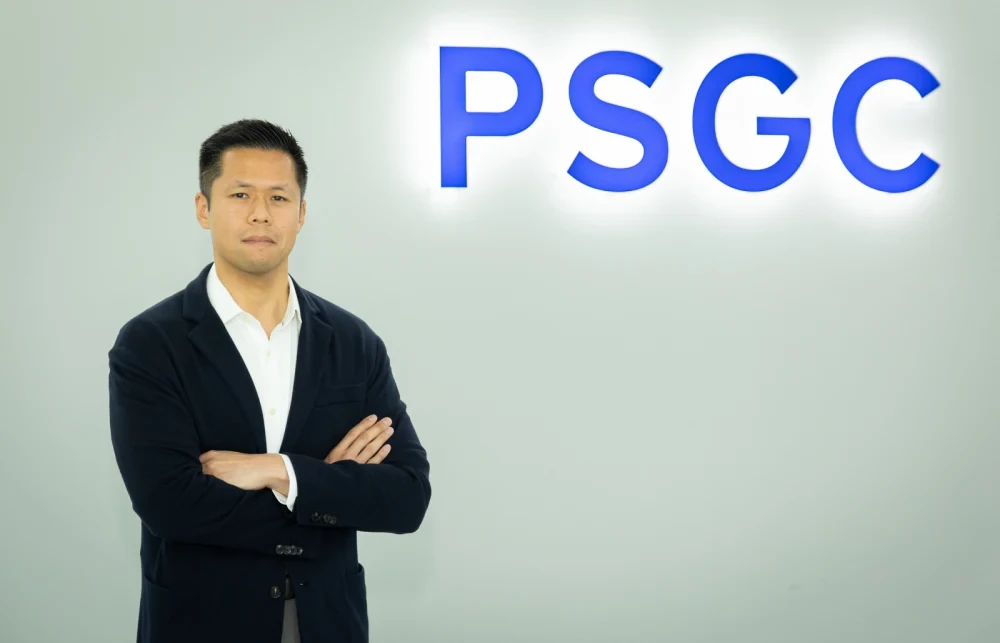
Mr. David Van Dau, Chief Executive Officer of PSG Corporation Public Company Limited (PSGC), sees this not as a temporary reaction but as a sign that ASEAN is weighing three goals at once: energy security, affordability and sustainability on the path to Net Zero. Balancing these goals will take the region through three phases of transition that do not unfold in a straight line. ASEAN is still largely in phase one, phase two is already under way, and phase three has pilot projects in place.
Phase 1 “Self-Supply”: Security Starts at Home
Over the past two decades, ASEAN has grown on the strength of plentiful, reasonably priced domestic resources. But Thailand’s Draft Power Development Plan (Draft PDP 2026) and Vietnam’s Revised Power Development Plan (Revised PDP8) both point to a much bigger challenge ahead.
- Thailand: Under the base case, peak demand is projected to rise from around 36,000 megawatts in 2026 to between 74,000 and 80,000 megawatts by 2050, more than double, driven by electric vehicles and data centers. The draft plan therefore targets more than 50,000 megawatts of new capacity between 2026 and 2037, mostly solar and energy storage.
- Vietnam: The plan assumes economic growth of about 10% a year over 2026–2030, under which commercial electricity demand and peak demand will more than double within two decades. Coal generates about half of the country’s electricity today and Vietnam is increasingly reliant on imports, yet the Revised PDP8 allows no new coal-fired plants after 2030.
Phase 2 “Cross-Border Connectivity”: Dedicated Roads Linking Neighbors
When domestic resources fall short and no country can go it alone, the first step is to buy directly from neighbors, and some of this is already happening. ASEAN sees the ASEAN Power Grid (APG) as a way to deliver on all three goals: security, affordability and sustainability. Yet over more than 50 years, the region has invested only around USD 2 billion in cross-border transmission, and 85% of those lines run one way, from a power plant to a buyer country, such as from Lao PDR to Thailand. Each project relies on a contract negotiated case by case, much like a dedicated road built for a single user.
PSGC’s own business illustrates this. Its coal transport from Lao PDR to Vietnam, carried out under a cooperation framework between the two governments, shows that connecting energy across borders takes more than physical infrastructure. It also requires trust between states, multimodal logistics management and the ability to cope with increasingly unpredictable weather.
Phase 3 “Open Trading”: From Dedicated Roads to a Highway for Everyone
The next step is to turn these dedicated roads into a network in which power flows in both directions and passes through third countries, and buyers can choose their sellers under a common set of rules. The Lao PDR–Thailand–Malaysia–Singapore Power Integration Project (LTMS-PIP), which carries electricity from Lao PDR via Thailand and Malaysia to Singapore, is ASEAN’s first multi-country power trade. However, upgrading to two-way, grid-to-grid interconnection will require around USD 27 billion by 2040, more than 14 times the total invested to date. The ASEAN Centre for Energy (ACE) has therefore proposed developing rules for multi-country power trading over 2031–2045, expanding to regional reserve sharing in the longer term.
Its location gives Thailand the opportunity to become a transit hub for power flowing from the Mekong Basin to southern ASEAN. Lao PDR is expected to be the region’s largest net power exporter, while Thailand and Vietnam will be net importers. Vietnam is also planning to export electricity to Singapore and Malaysia by 2035. The ASEAN Centre for Energy estimates that full interconnection would reduce the generating capacity the region needs to build by around 12% and lower long-term generation costs by around 17%.
In an interconnected market, what is traded includes not only electricity but also the ability to deliver it when the system needs it, as each country’s demand peaks at different times. The Draft PDP 2026 indicates that Thailand’s peak demand is shifting from the afternoon to the evening, when solar power cannot generate. Cross-border interconnection will allow large-scale energy storage to be used more efficiently. Batteries respond quickly and suit day-to-night load shifting, while pumped storage hydropower offers advantages in scale and discharge duration. In Thailand, the Draft PDP 2026 includes three new pumped storage projects by the Electricity Generating Authority of Thailand (EGAT), totaling 2,480 megawatts, at the Chulabhorn, Vajiralongkorn and Kathun dams, coming online in stages between 2034 and 2037.
PSGC’s View: Keep Pace with Each Phase and Prepare for the Next
Mr. Dau said, “A sustainable energy transition is not measured by how quickly we abandon conventional energy, but by our ability to move in step with the system’s readiness at each phase. Today, ASEAN is moving from an era in which each country asked what to generate power from, to one in which it must ask whom to connect with and, ultimately, how energy will be traded. Players who understand this rhythm and lay the groundwork early will create the most value in the region’s energy value chain.”
At present, PSGC operates upstream in the energy supply chain through its investment in Nam Tien Limited Liability Company (NT), which runs mining operations in Lao PDR and exports coal across the border to Vietnamese state-owned enterprise buyers under the Lao PDR–Vietnam government-to-government cooperation framework. This business serves both as a source of energy security that power systems still rely on in phase one and as an example of cross-border energy flows in phase two. PSGC believes it can evolve into electricity transmission in the future. The next step is vertical integration from upstream to midstream and downstream, adding value across the entire chain and becoming part of a “Connected Energy” system that links energy across the region.
The energy transition of the coming decade will therefore be measured not only by how much clean power is produced, but also by how well the region can connect and trade energy across borders. That is the path PSGC is preparing for, starting today.